
“About 95% of American craft brewers and brewery owners are White, male and straight. Why?”
It started, as many things do, with a simple question and the rabbit hole of research that followed. It’s not a new topic, nor one that has never been touched by other writers about craft brewing. It is less about the product itself and more about the people that make up that specific commercial sector.
This general profile is not a secret or scandal within the craft beer industry, as the demographics are relatively obvious and well-known by all involved—production, distribution, retail and consumers. In the setting of our national economy and the greater social issues we face today, it may only be a minor piece of trivia. Yet it stands as an oddly specific fact, a distribution not shared with similar commercial businesses like local bars or restaurants.
The public has a caricature of the typical craft beer drinker that lies somewhere between Zach Galifianakis and a Seattle barista. The perception of brewers and brewery owners is not that far off, occupying the space around eccentric artist, college fraternity, celebrity chef and dedicated cosplay. No doubt, these are all serious business professionals; however, the common thread here is male and White, which is not entirely inaccurate. Women, the non-cisgendered and persons of any ethnic background are still considered exceptions, even this far into the twenty-first century.
Very little demographic data exists for any of the industry, much less the racial and gender makeup of employees and ownership. This is still a relatively new commercial sector, its lifetime measured in only a few decades. It is one that also does not attract a great deal of capital investment, with which marketing and related research usually follows. Companies can quote chapter and verse about the demographics of cell phone users or who might buy diapers but are almost blind with regard to who buys their beer. Self-analysis of the craft brewing industry is sparse, at best.

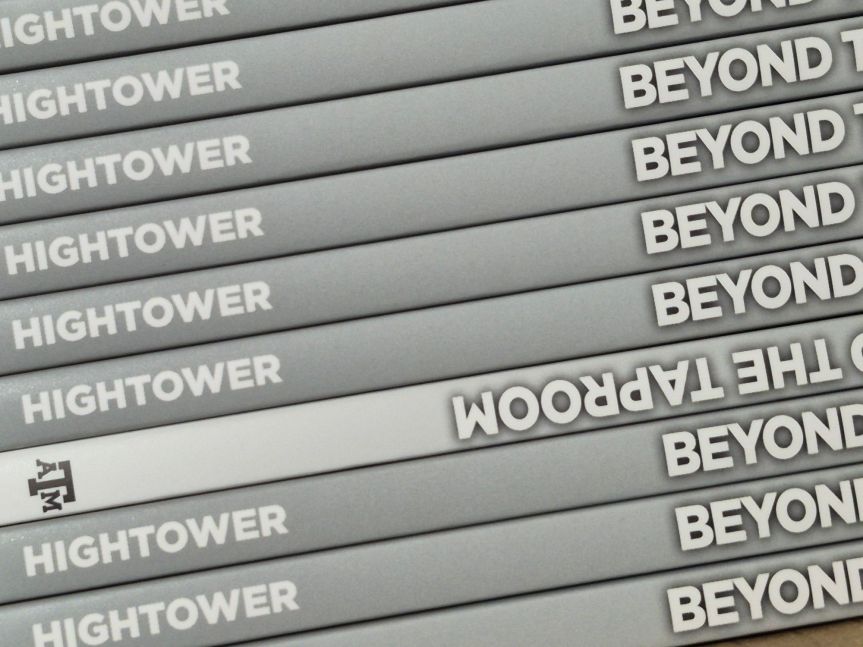
The book Beyond the Taproom explores five different demographic tracks within Texas: African American, Latino, Women, Asian American and LGBTQ. Because data is scarce on this subject, much of the book consists of topical history, relevant vignettes and personal experiences from those in the craft beer industry itself. Accounts range from the newest Texas breweries to some of the longest-lasting participants, and span from the Gulf to the Panhandle. Previously published pieces from other local craft beer writers are tied in and acknowledged where relevant. What slim data exists is presented in context, especially with regard to related industries and the state population at large, including conjectures of what the industry could look like if its makeup were on par with census data.
So where does this leave us with regard to the original question? (Spoiler alert!) It happens to not have a simple answer, with dozens of reasons for the discrepancies and hence the subtitle, “Exploring Representation in Texas Craft Brewing.” Cultural forces, economics, personal taste, state regulation, retail trends, population shifts and even local history all play their respective parts. Even defining the question properly poses difficulties in this age of mixed corporate ownership and staffing that may give the illusion of diversity. An easy and direct result would have been most satisfying but, as they say, “It’s complicated.”
More importantly: Why should we care? Why does the makeup of craft brewers and brewery owners matter? Craft brewing has become a persistent and valid commercial sector but its continued growth may depend on more closely mirroring its consumer, which means it needs to better reflect the population at large. (The industry has become established and perennial, so ignore any language of a “bubble” ending.) If the consumer base grows too far beyond those who make up the business itself, interest and therefore sales may end up chasing rather than leading.
Times have changed since the craft brewing industry began here in Texas not that long ago, as have the products and regulatory environment. And the things that have shifted most significantly here in the new century are our state and national demographics. That is a fact that should not be overlooked.
Let me know your thoughts on the subject. PH
Note: This article includes shameless self-promotion. Deal with it.

