
There is one ancient beer style that survives today but few breweries will attempt. It is a little mysterious, often misunderstood, and can be difficult to brew. It is a slightly sweet, slightly strong brown beer called a braggot, and more breweries should embrace this complex historical style.
Braggot recipes date back to Medieval Europe, and were especially favored in Wales and Ireland. Technically, it is a beer brewed with a significant amount of honey (often a 50/50 ingredient blend, with some variation), which places it in a hybrid category that straddles the line with traditional meads. Unlike a lot of modern honey ales, the honey for a braggot is not a late blended addition but part of the fermentable base, which can give rise to some difficulties in brewing.
Meads have not yet been featured in this space (the beverage could fill a dedicated blog of its own) but are among the oldest of fermented beverages produced by human civilization. The reader should be familiar with enough brewing theory to recognize the process: yeast consumes sugar to produce alcohol and carbon dioxide. A true mead will use honey instead of fruit or malt as the sugars for the yeast to consume, with such beverages classified by the source of sugars. Beer uses grain; wine uses grapes; cider uses apples; and likewise, meads are made from honey.
“When three passionate Texas businesses team up, you know you’ve got a winning hand…”
The style of braggot is most definitely a beer, made with the traditional malt and hops but also including a sizeable amount of honey in the recipe. Modern honey can be found with a wide selection of flavors based on the local flora the bees producing it were exposed to, lending elements of flowers, fruit or wild herbs to the sticky amber. A braggot can also be brewed with a variety of spices or even with fruit additions to compliment the particular honey strain used. This lends a broad categorization to the range of possible braggots, with almost as many substyles and specialties as there are total craft beer styles today.
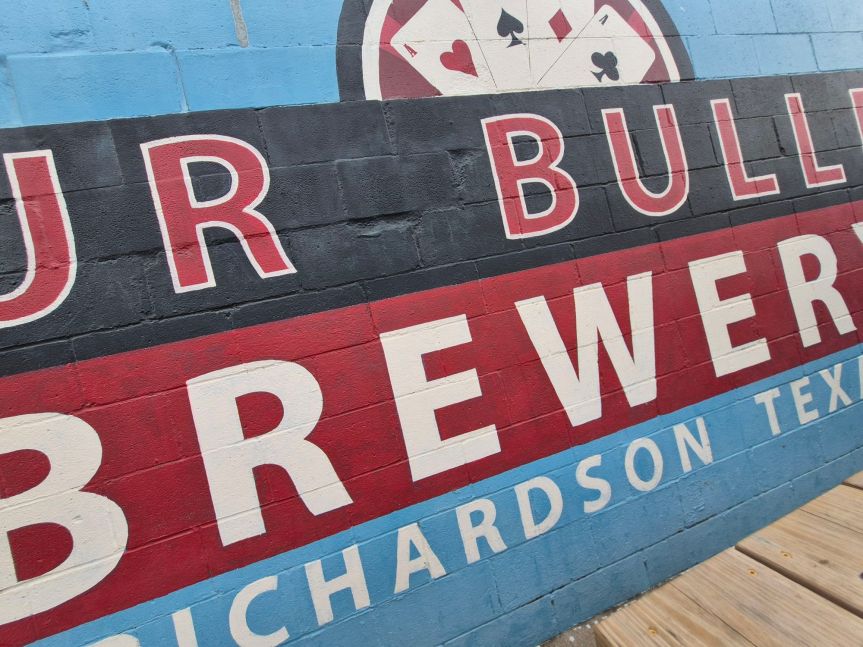
However, one North Texas brewery not only brewed up a braggot but also recently won an award for it. Four Bullets Brewery of Richardson took home a medal at the 2026 Texas Craft Brewers Cup in Austin just weeks ago, an all-Texas competition sponsored by the Texas Craft Brewers Guild. Their entry was a collaboration with Fox & Raven Meadery of Carrollton and Fort Worth’s TexMalt, and their traditional braggot “Sweeten the Pot” took home a gold in the Fruit and Field Beer category
As Four Bullets Brewery described it on social media: “When three passionate Texas businesses team up, you know you’ve got a winning hand… Using all Texas-grown malt and Texas tallow tree honey. Sweet and smooth, and deceptively strong.” Strong is accurate at ABV 9.2%, but the beverage itself is never hot or alcoholic on the palate. The closest purely craft beer style to compare with a braggot would be a robust bock or something similar, something deeply malty with minimal hops.
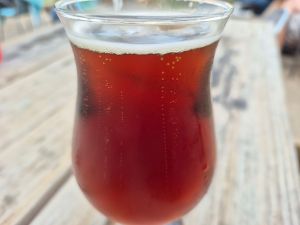
Sweeten the Pot is mid-range for the style but almost flawless: It is malty like a bock but heavier, however not as darkly roasted as a doppelbock. Hints of honey emerge after a few sips, leaving a stickier mouthfeel than a traditional amber or brown ale. The roasty flavor finds its balance somewhere between sweet and dry without fully embracing either. It is bready, biscuity, almost buttery with some very faint notes of honeysuckle or sweet flowers.
The challenge of brewing a braggot is capturing both its beer and its mead nature, with neither dominating the flavor profile. Meads can take months (or years!) to ferment out completely, after which time the sharp, fresh, volatile hops oils have long faded into the background. It should be recognizable first and foremost as a beer but one influenced by the sophistication of the specific honey used, preferably something local or regional.
Encourage your favorite local brewery to try and brew a braggot, and support your local meadery. PH

