
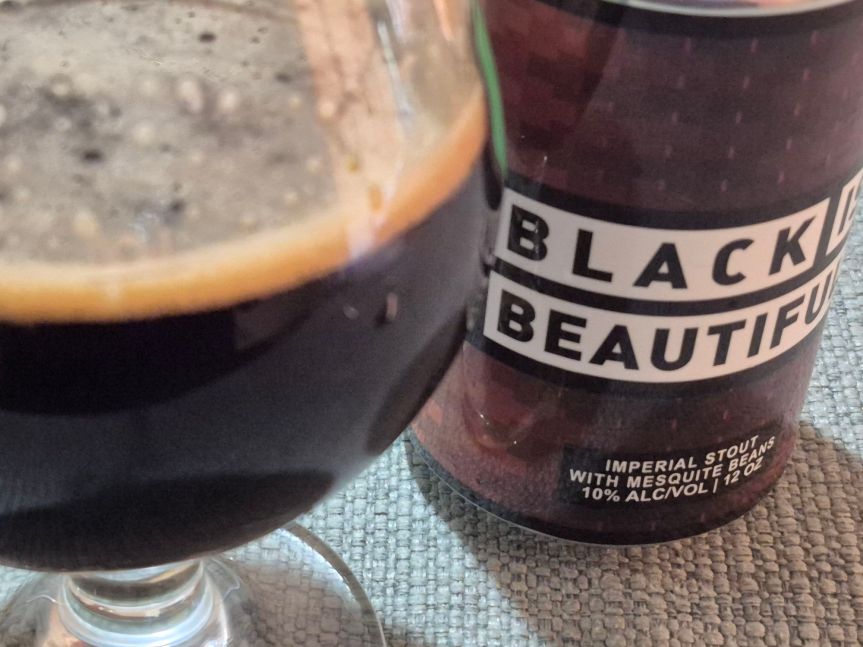
You see it in that glass at the end of the bar, an inky beverage that looks like dark coffee or sorghum poured into fancy stemware. It must be a beer, given your environment, but it is not the golden or amber hue you’re accustomed to with brilliant clarity and lively carbonation. It looks like it requires instructions just to drink it. It is alien, and as intimidating as a craft beer can be.
What is the consumer appeal of this mysterious dark beer? What drives craft beer fans to stouts, bypassing the more attractive and accessible lagers, brown ales, wheat beers or IPAs? Stouts have become a craft beer staple, enjoyed with special zeal at celebrated occasions or during colder seasons. They are regularly welcomed in the kitchen as additions to meaty stews and chilis. Some stronger stouts are cellared for years by aficionados, benefiting from a long, cool rest to develop added depth like fine spirits.
Stout is one of the rare beer styles that (mostly) has a singular and identifiable origin. It traces its beginnings to the famous Irish brewer and philanthropist Arthur Guinness (1725-1803), who brewed ales at his St. James’s Gate brewery in Dublin. Following consumer demand, Guinness embraced the more popular porter style by the latter half of the 18th century, where it became the majority style made there by 1799. Guinness continued to experiment with the porter recipe, heavily roasting the malt to develop more flavor from it without adding cost to the process. (Beer at the time was taxed on the total amount of malt used, not the final ABV.)
The Guinness brewery ended up with several different consumer varieties, the most popular of which was their so-called “extra stout porter,” a name that was eventually shortened to simply stout. His West India porter had additional hops and was fermented to a slightly higher alcohol content for overseas transport to the Caribbean, and eventually became the foreign export stout style. Other British breweries soon followed suit, meeting consumer demand and popularizing the style both in the domestic and overseas markets. Today, Guinness brews more than 20 distinct recipes of its traditional branded Irish stout, many customized for regional tastes in different parts of the world.*
Stouts occupy that same consumer segment as coffee and cocoa, with many flavor components that overlap. The flavors derive from the Maillard reaction, a concept that should be familiar to cooks both professional and amateur: Heating ingredients to 140-165°C (280-330°F) produces nonenzymatic browning, introducing hundreds of aroma and flavor compounds called melanoidins as well as giving a characteristic darker color to the surface. The chemical process that makes grilled steaks and fried onions appealing does the same when barley and other grains are roasted, imparting a pleasant bitterness and an added umami to dark beers like stouts.
The chemical process that makes grilled steaks and fried onions appealing does the same when barley and other grains are roasted
As a stylistic category, stouts have also proven to be remarkably malleable. They handle additional alcohol strength very well, with stronger stouts regularly reaching ABV 8-10% or more. One of the export stouts produced in 18th-century London won favor at the court of Catherine II (“Catherine the Great“) of Russia and was awarded a royal warrant to license as Russian imperial stout, a rich and heavy style still popular today. Imperial stouts also take to barrel aging almost by their nature, absorbing the complexities of residual wine, port and whiskey flavors as easily as their initial dry roast.
The variety of stouts embraced by consumers continued to multiply in the following century. Cold coffee is a natural and easy addition, resulting in coffee stout with characteristics of both beverages. Oatmeal is added to the recipe for oatmeal stout with a heavier and silkier mouthfeel. Lactose (milk sugar) is added to the traditional dry stout to make a sweeter recipe known as milk stout. (The growing demand of sweeter stouts with lactose or oatmeal led to the reclassification of the original Irish style as dry stout.) Some dark-roasted malts take on a flavor that includes chocolate elements, leading to chocolate stout—which rarely includes chocolate additions, although roasted cacao nibs are not an unusual ingredient. Oysters were a very popular and cheap pub and tavern dish in the 18th and 19th centuries, which gave rise to beers brewed with brine or a handful of oysters known as oyster stout.
The most recent evolution of the stout style has arisen with the modern American craft beer movement, a variety that is often collectively referred to as “pastry stout.” Because stouts take adjunct additions so readily, brewers have not been shy about experimenting with a legion of flavors that range from vanilla, caramel or other extracts to cinnamon, marshmallows, coconut, mint, maple syrup, roasted nuts, dried chiles or dark fruits like cherries or raisins. The result is a near-dessert serving in a single glass that can rival a fully stocked Starbucks Trenta in sweetness and calories—but with alcohol.
The popularity of stouts has also given rise to a unique serving style called a nitro pour, identified by a longer tap spout than the rest. Instead of the traditional “beer gas” mix that includes carbon dioxide, a nitro pour uses a nitrogen infuser as a carbonation method (producing smaller, finer bubbles) and a restrictor plate inside the faucet that forces the beer through small holes to agitate the gas. The canned products include a patented device (“the widget“) that infuses a pressurized nitrogen load into the liquid as soon as the can is opened for a similar effect. The result is largely one of texture and mouthfeel, creating a smooth and creamy pour with a longer-lasting head and cascading effect.
Given its variety and adaptability, stout’s inherent flavor characteristics are not only widely appealing but easily accommodating to many brewers’ visions. Maybe the reason behind its popularity is not so difficult to understand. PH
* The phenomenon of “vacation beer,” where that one beer you had that one time in that one place tastes better than the same beer back home, is a real thing. Recipes can sometimes vary country to county or by production facility.
 North Texas Beer Blog