
Recent events found me exploring the craft breweries of the Rio Grande Valley, an area largely forgotten by the state’s craft beer community at large. The region is physically separated from other major metropolitan areas by hundreds of empty highway miles yet interest in craft beer there is no less popular, and growing.
The last time I was in the area was a trip to visit family when I was about five years old, so the RGV was a completely blank slate for my expectations. It is a significant distance away from North Texas for a casual visit but no less interesting or enriching (and with Mexican food superior to anything available at all points north). The craft beer scene is probably a few years behind the rest of the state, with its remoteness forcing a more collaborative nature among brewers by necessity, but the drive and quality of beer is already on par with anywhere else in Texas.
My route began at the coast and followed the river north to Laredo, taking about half a week with plenty of stops. Other than Brownsville, Laredo and a cluster of suburbs in the McAllen area, the state highway is an easy drive speckled with small towns and a ton of agribusiness. The latest census puts RGV residents as about 91% Hispanic/Latino, and the people are almost universally friendly and the cross-border ties and influences deep.
One rare political aside for this blog: The US-Mexico border is surprisingly porous, and rightfully so. Established bridges for traffic and shipping are common, and foot traffic both ways is constant and enjoyed by residents of both nations. People live on one side and work or attend school on the other, and the so-called “border wall” is a pointless collection of partial and ineffective fencing pieces. Ignore the rhetoric; this is simply how people realistically live across an imaginary line on a map, and any tighter controls would be as ridiculous as enforcing a border between Dallas and Fort Worth. </politics>
The first stop was Padre Island Brewing, brewing since 1995 and now the second-oldest operating brewpub in Texas. South Padre Island is as bright coastal resort as you might imagine, a miles-long stretch of beach sandwiched between the water that hugs the state all the way up to Corpus Christi. Because the area has subsequently developed around the brewpub, brewing space limits it to only five beers on tap at any time. (Rumors floated of a second brewery planned for the island with ties to North Texas, but nothing could be confirmed.)
Starbase, Elon Musk’s proprietary neighborhood for his SpaceX rocket launches, is under heavy commercial development and a growing city unto itself. It is located directly on the Gulf between South Padre Island and the border, and limited in some places by a wetlands wildlife preserve. Nevertheless, that specific area has become a huge draw for commerce, tech employees and new residents, with an almost continuous line of construction vehicles lumbering down all highways toward the coast. It is obvious that money is quickly flowing into this area.
The RGV has already experienced its own regional turnover of brewery starts and closures, many suffering due to pandemic restrictions and the subsequent business downturn.
The craft brewery highlight on this trip was Pluton Brewing (Spanish for “Pluto”) in Brownsville, only a couple of years old but with beers that could easily win hardware at competition. It is located in the historic downtown district less than a mile from the border, an area that is enjoying new life with some planned urban revitalization. The Port of Brownsville is one of the largest in the US, and the city reminds me of New Orleans to a degree, a centuries-old town with Mexican influence instead of French.
About an hour up the highway are Howling Rabbits Beerworks (McAllen) and 5×5 Brewing (Mission), with Rio Brewing (Hidalgo) seemingly out of business (or possibly just a commercial event space with no brewing ops). Howling Rabbits is a modern and bustling sports bar with a dozen house beers on tap and a formula that is ripe for franchising. 5×5 Brewing is a veteran-owned and veteran-themed business, more of a traditional warehouse taproom filled with military memorabilia and now the elder craft brewery in the area, with many other startups having working ties here.
The RGV has already experienced its own regional turnover of brewery starts and closures, many suffering due to pandemic restrictions and the subsequent business downturn. That magic number of two or three years seems to be the point where many craft breweries hit a financial wall, in the Valley as well as the rest of Texas. Bravo Brewing in Roma (an historic sister city to Ciudad Miguel Alemán across the river) ceased operations only months earlier, as did Rio Grande Distillery & Brewery (Port Isabel), Big River Brewery (Pharr) and The Craft Brewery (Weslaco) in just the past few years. And this small list is by no means comprehensive for the area.
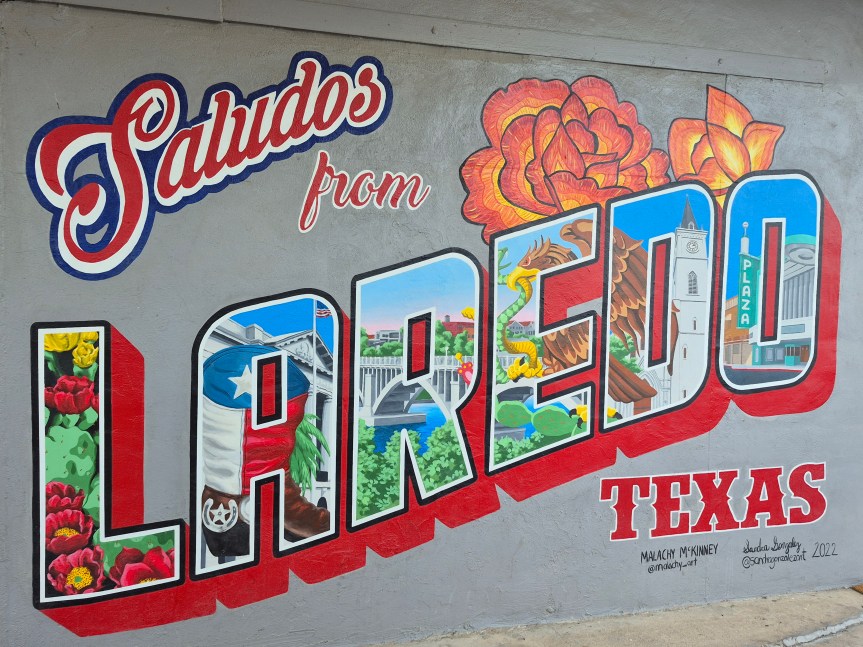
Still following the river north eventually leads to Laredo, a dusty and remote West Texas town that is larger than one expects with a population of at least 250,000 and serving as a major commercial hub of cross-border shipping. Laredo has two solid craft breweries, Laredo Brewing and Saludos Brewing, both with Latino ownership and with heavy cultural connections in decor and beer names. Saludos Brewing has been successful enough to be picked up by the H-E-B grocery chain for distribution in their stores statewide.
Texas’ Rio Grande Valley is an often overlooked area for craft beer, with few recognizable connections with the rest of the state, but it is no less a growing area of good brewing and curious consumers. I did not venture across the border this trip but a handful of Mexican craft breweries mirror those on the Texas side in some cities. The Valley can be quite a long trek from many places around the Lone Star State but it is definitely worth the trip. PH
 North Texas Beer Blog