
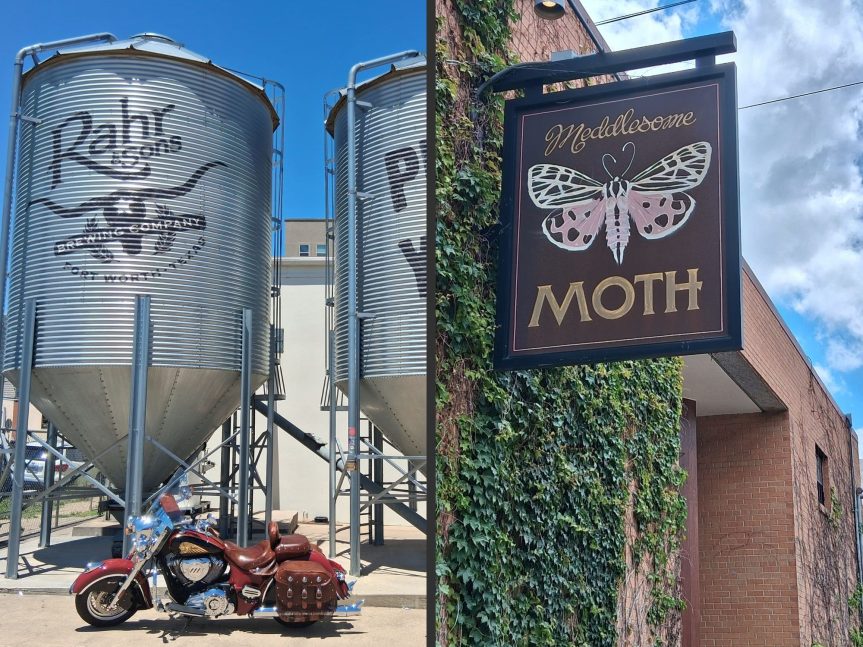
The title of this piece was troublesome. Originally, “The End* of Craft Beer in North Texas” or some variation, with the asterisk implying an explanatory note of not dark finality but more a hopeful spirit of “the end of the beginning.” Trying to find a title that is not too long and ambiguous is a challenge, and I’m still not happy with the final version.
To be certain, craft beer in North Texas is alive and well, and far from any declarations of its premature demise. However, two major closures this month mean that the North Texas craft beer scene is now moving into a distinct and wholly new phase, both culturally and as a commercial industry. Think of it as the end of an extended childhood for the local businesses and a new step into a more mature, sustainable adult stage shared by the rest of the nation—which is a good thing.
To begin, Rahr & Sons Brewing announced they would be closing their Fort Worth site after 20 years at their original location, currently the oldest continuously operating craft brewery in North Texas. This Southside warehouse, formerly a distribution facility for Coca-Cola, has grown from a bare industrial block in a sketchy part of town to now being confined on all sides by modern commercial development as the area gentrifies. For many years, it along with Franconia Brewing in McKinney formed the axis of local craft brewing long before every municipality had its own locally flavored brewery or brewpub. But growth, inevitably, requires big breweries to continue expanding.
Fritz Rahr has grown into the craft beer godfather for North Texas, with a string of local brewers cutting their professional teeth in his brewhouse before opening their own businesses around the area and beyond. Rahr (the brewery) has persisted, sometimes by the sheer will of its owner, into a commercial success despite economics, investor troubles and a freak winter storm that all but destroyed the brewery in 2010. Fritz subsequently took a back seat to day-to-day operations as he accepted an outside position in the Caribbean to keep the brewery solvent.
Rahr (the man) fought local investors to reclaim his business, which today operates as one of the largest breweries by capacity in the North Texas region. His Ugly Pug Black Lager almost singularly redefined craft beer for Fort Worth residents, and even with that game-changing schwarzbier now retired, the brewery remained a social center for a generation of locals, homebrewers and volunteer workers. Fritz has assured us that the business will continue and soon reopen elsewhere (currently TBD), and that it will likely still be located within the city of Fort Worth.
Think of it as the end of an extended childhood… and a new step into a more mature, sustainable adult stage.
To the east, owner Shannon Wynne announced Meddlesome Moth, an offshoot of the same group behind the Flying Saucer chain of craft beer bars, would also close its premium location after 15 years in operation. Craft beer in Dallas was often defined not by a brewery but by a central collection of craft beer bars close to downtown, namely The Ginger Man, The Common Table, and Meddlesome Moth. Like Rahr, the Moth began in a relatively undeveloped block in the Design District and has watched the surrounding area explode with high-end properties, leaving its present location now financially unviable.
The Moth was designed as a more refined version of the popular Flying Saucer mega-pub, with a similarly lengthy tap wall and quarter-lined backsplash offering more than just a laundry list of popular craft beers. Great care was taken to curate the best beers available, some aged on-site for years, and to offer a food menu and drinking experience to match. The environment was intended to be semi-upscale but not stuffy, forgoing the short skirts on servers for white-tablecloth service (actually, butcher paper) in a dining room lined with dark woods, leather, and classic pieces of modern art.*
Along with The Common Table (located less than a mile away), the Moth played host to almost every significant modern name in the craft brewing industry. Beer dinners and other events featured authors, brewers and personalities like Garrett Oliver, Stephen Beaumont, Erik Ogershok and Larry Bell, as well as numerous local and state brewery owners, a running guest list of “who’s who” for craft beer both domestic and imported. It became a required stop for any and all craft beer aficionados, billed as “Dallas’ first true gastropub” and consistently listed among the top beer bars in the world.
But times—and consumers—change, and as revered as both these places are/were, they now belong to a different era in North Texas craft beer. Rahr was a literal unimproved warehouse and loading dock, charging admission for tours and a wristband for beers (as all breweries did, long before point-of-sale was legal) up to closing day. Moth’s forty-odd taps are just not that rare any more, with places like Katy Trail Ice House, The Brass Tap, On Tap, What’s on Tap, Bar Louie and numerous others owning the sector. Even grocery chains like Whole Foods Market have expanded tap offerings now.
This is not to imply that either Rahr & Sons Brewing nor Meddlesome Moth were classic “failed” businesses. To the contrary, both were wildly successful in their time: Rahr is less closing than reinventing itself as a brewery, and many begged Wynne to relocate Moth rather than close outright. But costs and finances were definitely part of their respective decisions, and both business owners saw that the era they helped build from scratch has possibly outlived their commercial visions.
These two beloved local businesses may be lost but their iconic owners will continue in North Texas, a sign that competition is alive and well and that keeping up with consumers is priority for all businesses today. The Old Guard is fading away, as OGs are supposed to do, and a newer market and new players are emerging. And despite serious pangs of nostalgia from the old guys, the best days may still be ahead of us. PH
* Dominating the space was the striking triptych of rock idols in stained glass (Chuck Berry, Elvis Presley, Jerry Lee Lewis), which will be sold together at auction as a complete set, with current appraisal between $350,000 and $500,000. Serious inquiries only.
 North Texas Beer Blog
One thought on “Rahr & Moth: End of an Era”